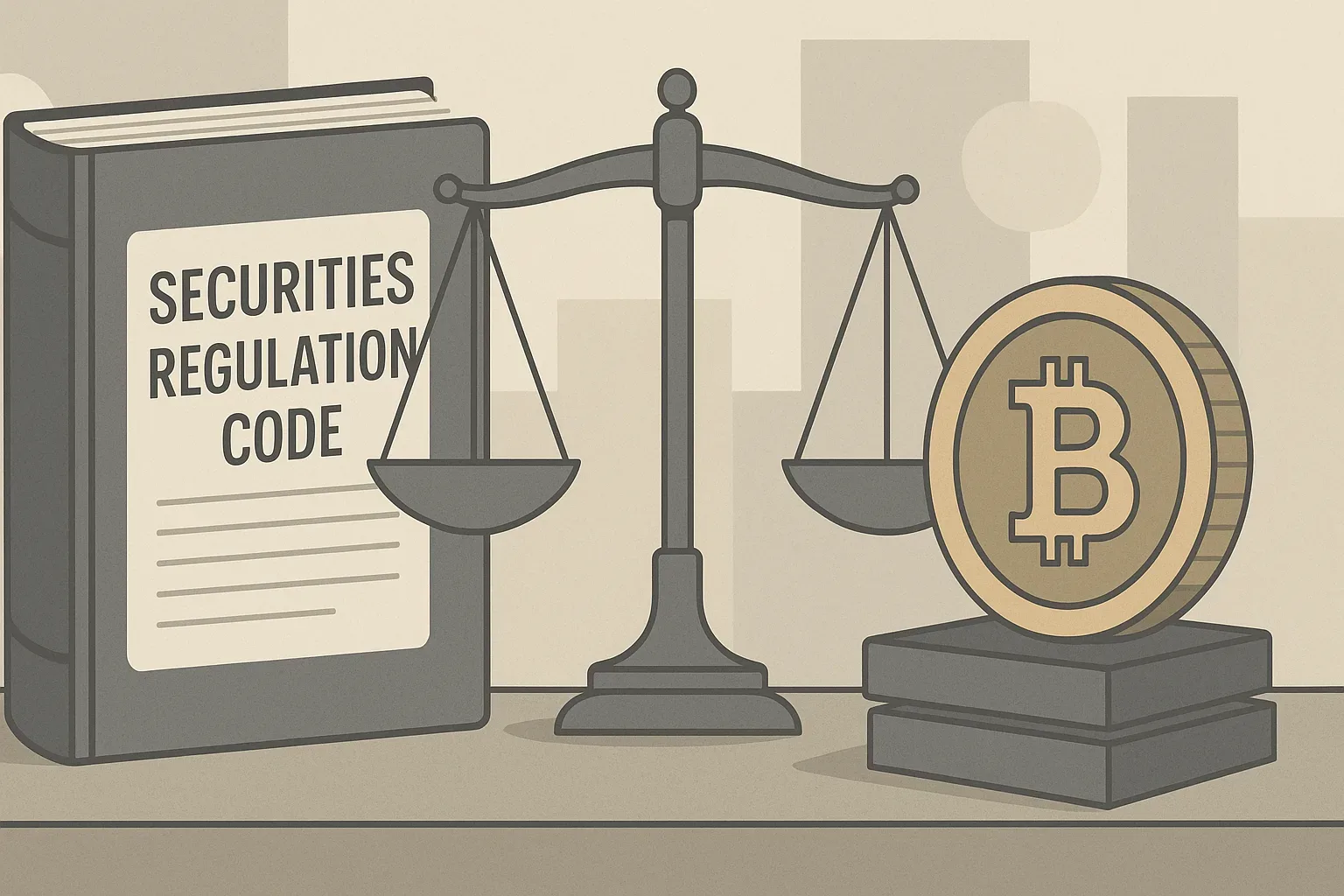
Securities Regulation Code
This definitive guide explains how existing securities regulation codes are interpreted and applied to the unique characteristics of cryptocurrencies and digital assets, offering clear insights for market participants navigating the evolving regulatory landscape and compliance challenges.
- 1. Understanding the "Securities Regulation Code" in the Digital Asset Era
- 2. The Foundation: What Defines a "Security" in Traditional Finance?
- 3. The Howey Test and Its Application to Cryptocurrencies
- 4. Global Perspectives: How Major Regulators Interpret Crypto Securities
- 5. Impact on Crypto Projects: From ICOs to DeFi and NFTs
- 6. Key Regulatory Bodies and Their Enforcement Actions in the Crypto Space
- 7. Navigating Compliance: Strategies for Crypto Startups and Platforms
- 8. The Future of Crypto Securities Regulation: Challenges and Potential Reforms
- 9. FAQ
Understanding the "Securities Regulation Code" in the Digital Asset Era
The emergence of cryptocurrencies and digital assets has presented a profound challenge to established financial regulatory frameworks. While innovation in blockchain technology continues at an unprecedented pace, the fundamental laws governing financial instruments, primarily the Securities Regulation Code, remain largely unchanged.
The core difficulty lies in fitting novel, often decentralized, technologies into regulatory structures designed for traditional, centralized entities. Regulators globally grapple with balancing investor protection, market integrity, and fostering innovation. For crypto projects, understanding this interpretation is not merely a legal formality; it dictates project structure, fundraising strategies, operational compliance, and ultimately, market access.
The Foundation: What Defines a "Security" in Traditional Finance?
The overarching purpose of these laws is to ensure full and fair disclosure of information to investors and to prevent fraud in the offer and sale of securities.
It refers to an investment of money in a common enterprise with a reasonable expectation of profits to be derived from the entrepreneurial or managerial efforts of others. This flexible definition was established by the U.S. Supreme Court in the landmark 1946 case SEC v. W.J. Howey Co., and it forms the bedrock for assessing whether a novel financial instrument, including a digital asset, falls under securities law jurisdiction.
The Howey Test and Its Application to Cryptocurrencies
The Howey Test comprises four key prongs, all of which must be met for an instrument to be classified as an "investment contract" and thus a security. Regulators, most notably the U.S. Securities and Exchange Commission (SEC), apply these prongs rigorously to digital assets: an investment of money, in a common enterprise, with an expectation of profit, derived solely from the efforts of others.
Most crypto projects, particularly initial coin offerings (ICOs), satisfy this, as investors contribute to a shared project.
Finally, and often the most contentious point for digital assets, is that profits must be "derived solely from the managerial or entrepreneurial efforts of others." This examines whether a centralized team, founders, developers, or other third parties are primarily responsible for the development, marketing, and success of the digital asset, even if the underlying network aims for decentralization.
Global Perspectives: How Major Regulators Interpret Crypto Securities
The interpretation of crypto securities varies significantly across global jurisdictions, leading to a fragmented regulatory landscape. The Commodity Futures Trading Commission (CFTC) views Bitcoin and Ethereum as commodities, creating jurisdictional overlaps and ongoing debates.
The European Union has adopted a more bespoke approach with the Markets in Crypto-Assets (MiCA) regulation. MiCA categorizes crypto-assets into e-money tokens, asset-referenced tokens, and other crypto-assets, establishing tailored rules for issuance, authorization, and operation, rather than retrofitting existing securities laws.
Singapore's Monetary Authority of Singapore (MAS) integrates digital tokens into existing capital markets laws if they possess the characteristics of securities, applying a functional approach. Japan's Financial Services Agency (FSA) also differentiates between crypto-assets regulated under the Payment Services Act and security tokens regulated under the Financial Instruments and Exchange Act.
Impact on Crypto Projects: From ICOs to DeFi and NFTs
Securities regulation has had a profound impact across various segments of the crypto ecosystem. Projects that failed to register or qualify for exemptions faced severe penalties, forcing a shift towards alternative fundraising methods like Security Token Offerings (STOs) or equity raises.
Decentralized Finance (DeFi) presents complex challenges.
Non-fungible tokens (NFTs) typically function as unique digital collectibles and often fall outside securities classification. However, if an NFT project involves elements such as fractional ownership, revenue-sharing mechanisms, a promise of future appreciation based on the efforts of the project team, or is marketed as an investment opportunity, it risks being classified as a security.
Key Regulatory Bodies and Their Enforcement Actions in the Crypto Space
In the United States, the Securities and Exchange Commission (SEC) has been the most active regulatory body regarding crypto securities. The SEC's strategy involves applying the Howey Test to assert jurisdiction over a vast array of digital assets and platforms.
The Commodity Futures Trading Commission (CFTC) also plays a significant role, particularly regarding digital assets deemed commodities, such as Bitcoin and Ethereum. The CFTC regulates derivatives built on these assets and has taken enforcement actions against unregistered derivatives trading platforms. This dual jurisdiction often creates regulatory uncertainty and turf wars between the agencies.
Globally, other regulators like the UK's FCA, Singapore's MAS, and Germany's BaFin have also initiated enforcement actions against non-compliant crypto entities, emphasizing investor protection and market integrity. The consequences of these actions can be severe, including substantial fines, disgorgement of profits, injunctions, cease-and-desist orders, mandatory registration, and in some cases, the delisting of tokens from major exchanges, leading to significant financial and reputational damage for projects and their executives.
Navigating Compliance: Strategies for Crypto Startups and Platforms
The first critical step is engaging experienced legal counsel specializing in digital asset law from the outset. This ensures that tokenomics design, fundraising methods, and operational structures are built with compliance in mind, aiming to avoid inadvertent securities classification or to properly structure as a security offering.
Tokenomics design should focus on genuine utility rather than solely investment potential. Projects aiming for decentralization should clearly articulate the pathway and mechanisms for achieving it, demonstrating how managerial efforts will diminish over time. If a digital asset is likely to be classified as a security, projects must either register it with the relevant regulatory bodies or qualify for appropriate exemptions, such as Regulation D or Regulation A in the US, which typically involve accredited investors or smaller offerings.
Transparency through clear whitepapers, comprehensive risk disclosures, and regular reporting, even if not strictly mandated for non-security tokens, can build investor confidence and demonstrate a commitment to best practices. Finally, actively engaging with regulators, participating in industry dialogues, and considering operation within jurisdictions with clearer regulatory frameworks can provide a more stable environment for growth.
The Future of Crypto Securities Regulation: Challenges and Potential Reforms
The future of crypto securities regulation faces significant challenges, primarily driven by the rapid pace of technological innovation, the borderless nature of digital assets, and the ongoing jurisdictional conflicts among regulators. The existing "one-size-fits-all" approach of applying decades-old laws to novel technologies often creates uncertainty and stifles innovation, while also potentially leaving gaps in investor protection.
Potential reforms include calls for new, bespoke legislation specifically designed for digital assets, moving beyond the current framework of retrofitting existing securities laws. Such legislation could provide clearer definitions for different types of crypto-assets, tailored disclosure requirements, and pragmatic pathways for compliance. Regulatory sandboxes and innovation hubs will likely continue to play a role in allowing new technologies to develop under supervised conditions.
Future regulations may also adopt a technology-neutral approach, focusing on the economic function and inherent risks of an asset rather than its underlying technology. Clarity on what constitutes "sufficient decentralization" to remove an asset from securities classification will remain a key area of development, shaping how truly decentralized autonomous organizations (DAOs) and protocols are viewed by legal frameworks globally.
Frequently asked questions
- What defines a "security" under regulatory codes, and how does this apply to cryptocurrencies?
- Under regulatory codes like the U.S. Securities Act of 1933, a "security" broadly includes instruments like stocks, bonds, and "investment contracts." The core definition of an investment contract, established by the Howey Test, states it involves an investment of money in a common enterprise with an expectation of profit derived from the efforts of others. For cryptocurrencies, regulators apply this test to determine if a digital asset functions as an investment contract, assessing whether investors contribute funds to a shared venture, expect financial gains, and rely on a central team or promoter for the project's success. Many initial coin offerings (ICOs) and certain tokens with investment characteristics have been classified as securities based on these criteria.
- How is the Howey Test specifically used by regulators like the SEC to classify digital assets?
- The SEC uses the four-pronged Howey Test to classify digital assets. First, an "investment of money" encompasses any valuable contribution, including fiat or other cryptocurrencies. Second, a "common enterprise" is usually met if investors' funds are pooled or their fortunes are tied to the project's success. Third, an "expectation of profit" is generally present when investors anticipate price appreciation or financial returns from their tokens. Fourth, and most critically for crypto, these profits must be "derived solely from the managerial efforts of others." This prong examines if a centralized team, founders, or promoters are primarily responsible for the development, marketing, and overall success of the digital asset, even if the underlying network aims for decentralization. If all four prongs are met, the asset is likely deemed a security.
- What are the primary legal and compliance challenges crypto projects face regarding securities regulation?
- Crypto projects face significant legal and compliance challenges due to securities regulation. The main hurdle is the uncertainty surrounding classification, as many digital assets operate in a regulatory grey area, making it difficult to ascertain if they are securities, commodities, or unique digital assets. If classified as a security, projects must adhere to stringent and costly registration requirements or qualify for complex exemptions, entailing extensive disclosure obligations and investor accreditation rules.
- How do global jurisdictions' approaches to crypto securities regulation differ?
- Global jurisdictions vary significantly in their approach to crypto securities regulation. The United States, primarily through the SEC, generally applies existing securities laws and the Howey Test, often classifying most digital assets with investment characteristics as securities. In contrast, the European Union's MiCA regulation has created a bespoke framework, categorizing crypto-assets specifically and providing tailored rules for issuance and operation, aiming for harmonized legal certainty. The UK's FCA distinguishes between unregulated exchange tokens and regulated security tokens, alongside some utility tokens. Singapore's MAS integrates digital tokens into existing capital markets laws if they function as securities. These diverse approaches create regulatory fragmentation, offering different levels of clarity and posing challenges for crypto projects operating internationally.
- What are the potential consequences for projects and investors if a crypto asset is deemed a security?
- If a crypto asset is deemed a security, especially one offered without proper registration, projects and their founders face severe consequences. These can include substantial fines, disgorgement of illegally obtained profits, cease-and-desist orders, and injunctions preventing further sales or operations. Founders and executives may incur personal liability, and the asset itself could be delisted from exchanges, significantly impacting its liquidity and market value. For investors, purchasing unregistered securities often means a lack of the statutory disclosures and protections mandated by securities laws, potentially increasing their risk of fraud or loss. While investors might have legal recourse, pursuing claims against non-compliant projects can be lengthy and uncertain.
- What is the future outlook for securities regulation in the evolving crypto landscape?
- The future outlook for crypto securities regulation is marked by ongoing evolution and calls for reform. Regulators worldwide are struggling with the rapid pace of innovation, the borderless nature of crypto, and the difficulty of applying traditional frameworks to decentralized technologies. There's a growing consensus that new, bespoke legislation is needed to provide clearer guidelines for digital assets, moving beyond retrofitting existing laws. Increased international cooperation is also anticipated to establish harmonized standards and reduce regulatory fragmentation. Future regulations may adopt a technology-neutral approach, focusing on the economic function and inherent risks of an asset rather than its underlying technology.